
Diagnostic Ultrasound is a non-invasive, radiation free, real time imaging tool used to assess soft tissue in our physical therapy office. It can assist with detection of muscle tears, tendon injuries, and ligament sprains, as well as, identification of joint abnormalities or bursitis.
Diagnostic Ultrasound devices generate sound waves which produce images of body structures in real time while sitting in your physical therapy appointment. We use the images to assist with diagnosing issues such as tendonopathies, rotator cuff injuries, knee pathologies, ankle sprains, and more.
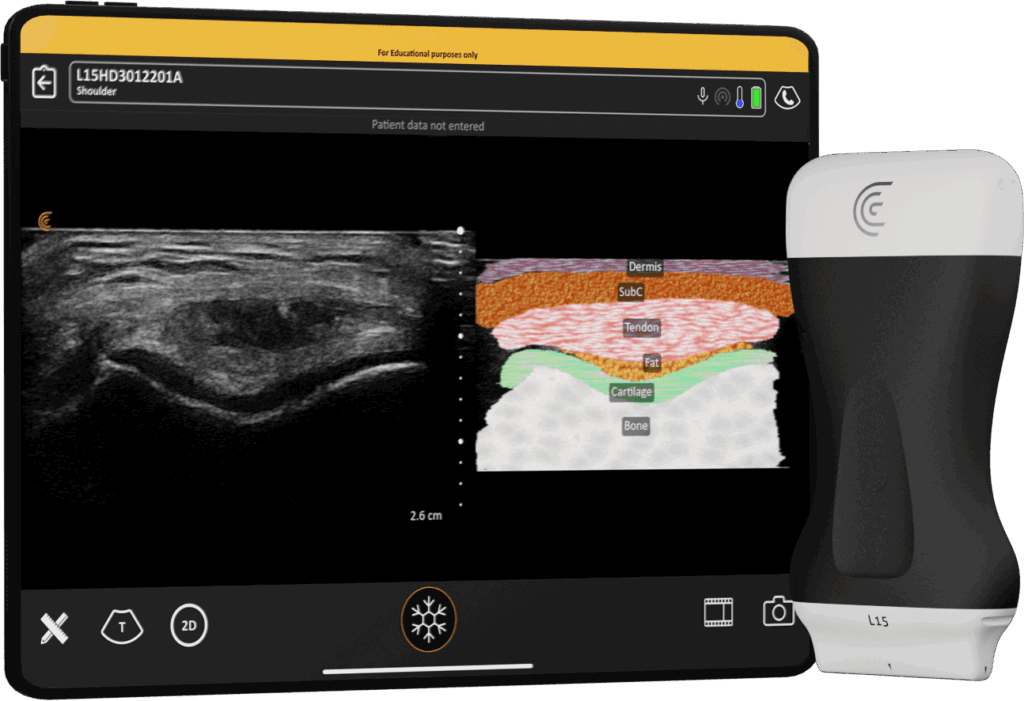
Benefits of Diagnostic Ultrasound:
- Location convenience: We perform diagnostic ultrasounds directly in house. No need to schedule with other imaging facilities.
- Cost: traditional ultrasounds involve more expensive costs for radiology assessment.
- Real Time Identification: Our trained Physical Therapists can assess your Diagnostic Ultrasound in real time, with you! This means they can diagnose your injury quickly, reducing time before treatment that could delay progress.
Ultrasound Guided Dry Needling
Ultrasound guided Dry Needling uses real-time imaging to precisely target deep muscle, tendon, or ligament tissues with monofilament needles, enhancing accuracy over traditional, “blind” palpation. This allows targeted treatment of specific soft tissues, deep within the muscular structures to increase bloodflow and accelerate the healing process.
Use of Ultasound when dry needling increases precision and safety with deep structures, allowing our therapists to visualize soft tissues while avoiding vital structures like nerves, blood vessels, and organs. It is highly effective for treatment of chronic conditions, scar tissue breakdown, deep trigger points, and nerve entrapment.
Who Benefits Most from Ultrasound Guided Dry Needling:
- People dealing with:
- Rotator cuff tendinopathy
- Gluteal or hip tendinopathy
- Achilles or patellar tendon pain
- Tennis elbow
- Chronic ankle or shoulder sprains
- Post-surgical stiffness or scar tissue
- Deep or difficult-to-reach injuries
- Pain not improving with traditional PT alone