
Intramuscular Manual Therapy or Trigger Point Dry Needling
Intramuscular Manual Therapy (IMT) otherwise known as Trigger Point Dry Needling is a treatment for relieving pain caused by muscular tightness and spasms which commonly follows injuries and often accompanies degenerative processes.
Combining the Intramuscular Manual Therapy techniques with other manual and rehabilitative methods has shown to be very effective in the treatment of chronic pain and speeding up the recovery time.
Dry Needling Reduces Pain
IMT can help relieve pain associated with nerve compression, tendonitis, and osteoarthritis of various joints. The treatment is also effective with decreased mobility, and chronic and acute pain syndromes.
Download the IMT Newsletter for more information.
What Conditions Do We Treat With Dry Needling?
- Neck and Mid-Back Pain
- Headaches and Migraines
- Hamstring and Lower Back Problems
- Muscle Tightness
- Chronic Pain Syndrome
- Sports-Related Injuries
- Hand and Foot Pain
- TMJ (Jaw) Disorders
- Pelvic Pain
- Many Other Pain-Related Disorders
How Dry Needling Works to Relieve Pain
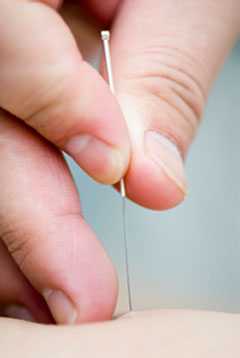
Dry Needling utilizes a very thin filament needle. The needle used is similar to an acupuncture needle but this treatment is not considered acupuncture and is based on Western physiologic approaches.
The needle is inserted into the trigger point and a local twitch response is ideally elicited. This twitch response is an involuntary contraction of the muscle that allows the muscle to relax.
Adding Electrical Stimulation to Dry Needling
Sometimes electrical stimulation is applied to the needle to elicit these twitches to help the muscle relax as well. The theory behind dry needling is that it works by disrupting a reflex arc of contracted tissue as well as stimulating biochemical changes to allow improved blood flow and healing to the area.